

Exhaust hoods & Ansul fire suppression
Every commercial cooking operation requires a UL-listed exhaust hood engineered to BTU output, plus an Ansul wet-chemical suppression system — inspected by fire marshal and health department before occupancy.
What We Build
Speed to revenue is everything. Commercial kitchen MEP, hood systems, landlord work-letter coordination — delivered across North Texas.
Pereff builds this vertical as a Real Estate Developer — for projects we develop ourselves or build-to-suit; our primary GC specialty is dental, medical, and veterinary.
The real complexity
Retail and restaurant construction is defined by one pressure: schedule. A missed opening date means missed rent-free periods, delayed revenue, and — for chains — a failed rollout quarter. The contractors who succeed here run tight schedules, know how to read a landlord work-letter, and have deep relationships with food-service MEP subcontractors. [Pereff Industry KB — verticals]
Restaurants add a layer most general TI contractors underestimate: commercial kitchen MEP. The equipment schedule drives the entire MEP design. Lock the equipment layout late and you pay to re-engineer. The health department review adds another cycle most schedules don’t account for. A GC who hasn’t run restaurant projects will compress your opening date by 4–6 weeks on the back end. [Pereff Industry KB — verticals]
Code-required, inspection-enforced, operationally critical. Each affects design, schedule, and budget.
Every commercial cooking operation requires a UL-listed exhaust hood engineered to BTU output, plus an Ansul wet-chemical suppression system — inspected by fire marshal and health department before occupancy.
High-BTU gas lines, dedicated water drops, floor drains at each station, and 200A+ dedicated circuits must be engineered against the kitchen equipment layout. The equipment schedule drives MEP design — not the reverse.
Municipal sewer codes require grease interceptors sized from fixture units and cooking equipment. Incorrect sizing fails health department inspection and creates ongoing compliance risk.
Texas restaurants require a pre-opening health department plan check and on-site inspection before CO. Equipment layout, material finishes, hand-wash station placement, and ventilation are all reviewed.
The work-letter defines what base building is delivered — and what isn't. Pereff reviews the work-letter before preconstruction to identify every gap between delivered scope and your concept's requirements.
Retail TI and restaurant build-outs span a wide range because kitchen complexity and finish tier move the number fast. Anchors grounded in DFW market data, May 2026.
Retail tenant improvement — standard
$90–$180/SF
Vanilla-shell conversion to mid-finish retail. Storefront, ceilings, lighting, MEP. Excludes FF&E.
QSR / coffee — shell to open
$200–$320/SF
Kitchen MEP, hood, Ansul, grease interceptor, walk-in. FF&E and kitchen equipment budgeted separately.
Full-service restaurant
$250–$500+/SF
Full bar, complex kitchen, high-finish dining room. Range reflects kitchen complexity and finish tier.
1,800 SF coffee / bakery in Plano
$480K–$680K ex-FF&E
All-in construction cost. Kitchen equipment, espresso bar, and FF&E typically an additional $150K–$300K+.
Kitchen equipment & MEP density
The equipment schedule drives MEP engineering. High-BTU gas, dedicated circuits, floor drains — each piece of equipment is a rough-in point. Complex kitchens mean more MEP density, the hardest cost to compress.
Hood, Ansul & suppression systems
Hood sizing and duct routing are engineered to cooking equipment. Changing the equipment layout after hood engineering restarts the process — lock the kitchen equipment schedule early.
Dining room finishes & custom millwork
Custom millwork, decorative lighting, tile, and bar back move the per-SF number quickly. Most visible to guests, most amenable to value engineering without compromising function.
Landlord scope split & TI allowance
A favorable work-letter — HVAC stubbed, plumbing rough-in in place — can reduce tenant costs significantly. Understanding the gap between delivered scope and your concept needs is the first preconstruction task.
These ranges are directional, researched May 2026. FF&E and kitchen equipment are budgeted separately — often the largest single line item in a restaurant project, frequently exceeding construction cost per SF. The real number comes from Pereff preconstruction. [DFW cost benchmarks, 2026]
Schedule reality
A restaurant that takes 5 months to build takes 9–12 months from “go” once design and review cycles are counted. [Pereff Industry KB — timelines]
Retail is fast if a prototype package exists. Restaurants require the kitchen equipment layout to be finalized before MEP engineering can proceed — pushing this delays everything downstream.
DFW suburban jurisdictions typically ~3–8 weeks. Restaurants add a health department plan check. Change-of-use permits — retail to restaurant occupancy — can add several weeks. [permitting timeline data, 2026]
Restaurant build-out: 4–7 months, with health department pre-opening inspection and fire marshal sign-off adding time at the back end. The CO issues after all inspections pass — not at substantial completion.
Lock the equipment layout first.
Commercial hood systems, walk-in refrigeration, and specialty kitchen equipment have 8–16+ week lead times. Every week the equipment decision slips compresses the opening date.
Before we quote
A directional number is only as good as the inputs. These six questions determine the range for your specific project.
QSR, fast-casual, full-service, coffee/bakery, or retail? Concept type defines kitchen scope, ventilation, health department review, and FF&E budget.
Full commercial kitchen or warming/assembly only? The difference determines hood size, MEP density, grease interceptor sizing, and whether fire suppression is required — the single biggest cost variable.
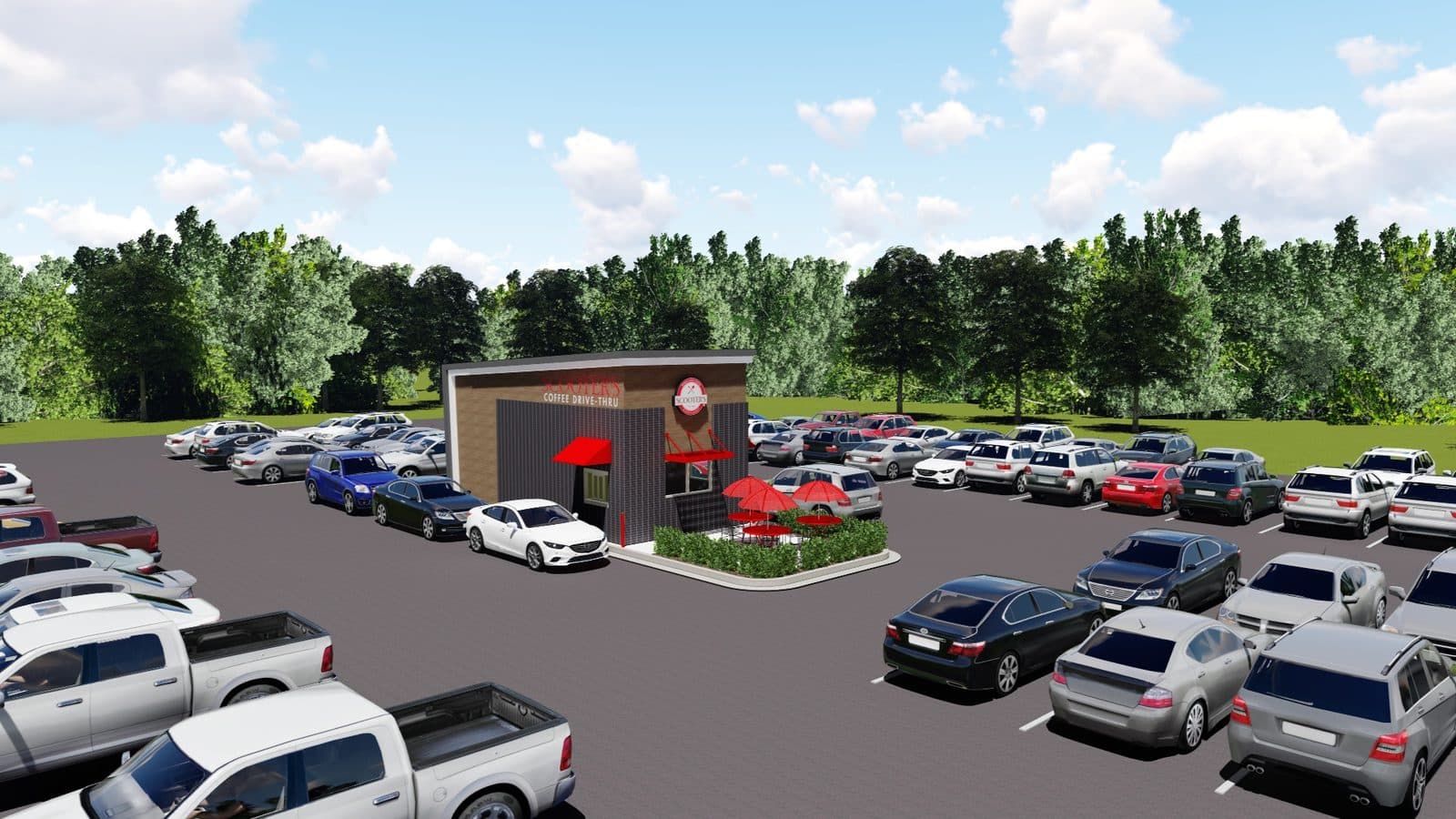
A drive-thru adds civil and sitework scope — stacking lanes, curb cuts, menu board placement, speaker/canopy — and affects site plan approval timeline and landlord coordination.
What does the work-letter deliver? HVAC to the space? Plumbing rough-in? Every item the landlord doesn't deliver is a tenant budget line item. We review the work-letter before any number is given.
Franchise rollout with a prototype package accelerates design significantly. If you have FF&E specifications, finish materials, or signage standards — bring them before preconstruction.
Working backward from your target open date is the only way to tell you whether your timeline is achievable — and what needs to be compressed or started in parallel.
Our work
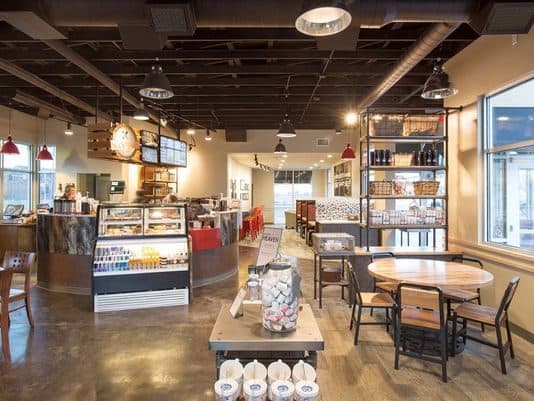
From Pereff's retail and restaurant work, including the Scooters drive-thru project.
Get a directional estimate, a permit timeline, or a breakdown of kitchen MEP requirements — grounded in real DFW benchmark data, cited.
Answers grounded in Pereff’s project data, DFW competitor intelligence, and current commercial construction benchmarks. Every answer cited.
Directional, May 2026: standard retail tenant improvement runs $90–$180/SF. A QSR or coffee concept runs $200–$320/SF (construction, excluding FF&E), and a full-service restaurant $250–$500+/SF depending on kitchen complexity and finish tier. As a reference point, an 1,800 SF coffee/bakery in Plano commonly lands $480K–$680K excluding FF&E, with kitchen equipment and FF&E typically an additional $150K–$300K+. These are directional planning ranges subject to final preconstruction review. [DFW cost benchmarks, 2026]
Construction runs about 2–5 months for retail and 4–7 months for a restaurant, with the health-department pre-opening inspection and fire-marshal sign-off adding time at the back end — the certificate of occupancy issues after all inspections pass, not at substantial completion. Counting design and permitting, a restaurant that builds in 5 months often takes 9–12 months from 'go.' Locking the kitchen equipment layout early is the single biggest schedule lever. [Pereff Industry KB — timelines]
Restaurant schedules live or die on commercial kitchen MEP and landlord coordination. Pereff reviews the landlord work-letter before preconstruction to find every gap between delivered base-building scope and your concept, sequences the equipment schedule to drive MEP design (rather than the reverse), and runs the health-department plan check as a planned cycle instead of a surprise. The result is fewer back-end delays — every week before opening is revenue not earned.
Pereff is not a lender. Pereff facilitates bank relationships as a value-add service based on the operator's financials and project viability; eligibility and final terms are bank-determined. Pereff builds retail and restaurant primarily as a real estate developer on projects it develops itself or build-to-suit — its primary general-contracting specialty is dental, medical, and veterinary work.
A restaurant build-out typically needs a commercial building permit, a health-department plan check and pre-opening inspection, fire-marshal review of the exhaust hood and Ansul suppression system, a grease-interceptor/plumbing approval, and sign permits for the storefront. A change-of-use permit (retail to restaurant occupancy) can add several weeks. DFW suburban jurisdictions typically review standard submittals in 3–8 weeks; Pereff manages the city-specific process. [permitting timeline data, 2026]
The earlier Pereff reviews the work-letter and equipment layout, the more schedule we can protect. Let’s talk before you sign the lease.