
Skip to content

Medical Construction — DFW

Medical practices, surgery centers, MOBs — built for clinical workflow.

Med-gas systems, ASC-grade HVAC, ICRA, imaging shielding. The MEP density in a 5,000 SF medical practice exceeds most 30,000 SF office builds. One team, one accountable point of contact.

Mid-complexity medical TI: $175–$450/SF (directional, May 2026)Class I oral surgery: $3.1M, 100% financed (Dr. Sheppard, Mansfield)ICRA-compliant construction in active facilities100% on-budget — every healthcare project to date

The real complexity

This isn’t an office with nicer finishes.

Clinical workflow drives the layout — not square footage and a floor plan. The procedure types performed, the imaging modality, the MEP density per exam room, and the sterilization and medication handling program all determine where plumbing, gas, power, and HVAC live. The specialty MEP density in a 5,000 SF medical practice is routinely higher than a 30,000 SF Class A office buildout. [Pereff Industry KB — verticals, medical]

The two things that most commonly derail medical construction: first, a GC unfamiliar with ICRA who doesn’t implement proper containment inside an active facility — risking infection events and regulatory action. Second, a medical gas system designed after the layout is locked, requiring expensive rerouting. Pereff’s design-build approach commits all specialty MEP before walls go up. [Pereff project experience, medical verticals]

As both a commercial GC and a Real Estate Developer, Pereff brings a unique advantage to medical ground-up: the ability to negotiate with cities as a developer, not just a contractor. On the Dr. Sheppard Oral Surgery project, Pereff negotiated approximately $200,000 in city-contributed infrastructure cost relief — something no GC-only firm could have done. [Pereff KB — Dr. Sheppard Oral Surgery project]

Real medical project

Dr. Sheppard Oral Surgery — Mansfield, TX

Class I Oral Surgery Facility — Ground-Up

Dr. Sheppard · Mansfield, TX

$3.1M8,272 SF 7-month permit process
  • Class I medical facility — oral surgery requires ASC-equivalent standards, the most stringent code level for outpatient medical construction

  • 100% project financing arranged by Pereff during a government political shutdown — favorable terms secured when most lenders were not moving

  • Heavy off-site infrastructure costs discovered post-land-purchase. Pereff negotiated ~$200,000 in city-contributed infrastructure relief — a developer capability, not a contractor capability

  • 7 months of city permitting managed by Pereff — Class I facility review is the most complex commercial permit process in DFW

  • Design-build with full value engineering — Pereff controlled cost from concept through construction documents, eliminating over-design that had derailed similar projects for other GCs

Full project story

What a Real Estate Developer can do that a GC cannot.

No other DFW medical GC is also a Real Estate Developer with 25+ years of city-negotiation experience. When the Dr. Sheppard project hit an unexpected $200K+ in off-site infrastructure costs, Pereff negotiated with the City of Mansfield to contribute that amount to the project. A pure GC cannot do this. A developer can.

The medical project types Pereff builds:

  • Primary care & family practice
  • Oral surgery (Class I medical facilities)
  • Specialty medical (ENT, ortho, cardiology)
  • Medical office building (MOB) — shell + TI
  • Ambulatory surgery centers (ASCs)
  • Imaging centers — radiology, MRI, CT
  • Medical ground-up — owner-occupied with NNN space

Every month of delay costs a medical practice more than you think.

A medical practice at full capacity generates substantial monthly revenue. A delayed Certificate of Occupancy means staff on payroll, rent due, and a patient schedule sitting empty. Pereff tracks this on every project — the schedule isn’t just a Gantt chart, it’s your revenue model. [medical practice revenue benchmarks, 2026]

Pre-application meeting

Saves 2–4 weeks on every permit

Complete first-submittal

Eliminates most resubmittal delays

Design-build value engineering

100% on-budget record

City negotiation as developer

Unique leverage no other GC has

What every medical project requires

The seven systems that separate a medical GC from a general TI contractor. Every Pereff medical project covers all seven.

Medical gas systems — NFPA 99

Piped oxygen, nitrous oxide, and medical vacuum governed under NFPA 99. Requires a specialty subcontractor, licensed installation, and post-construction certification review before health authority approval. Cannot be retrofitted — must be engineered into the layout from day one.
ASC-grade HVAC — pressurization & zones

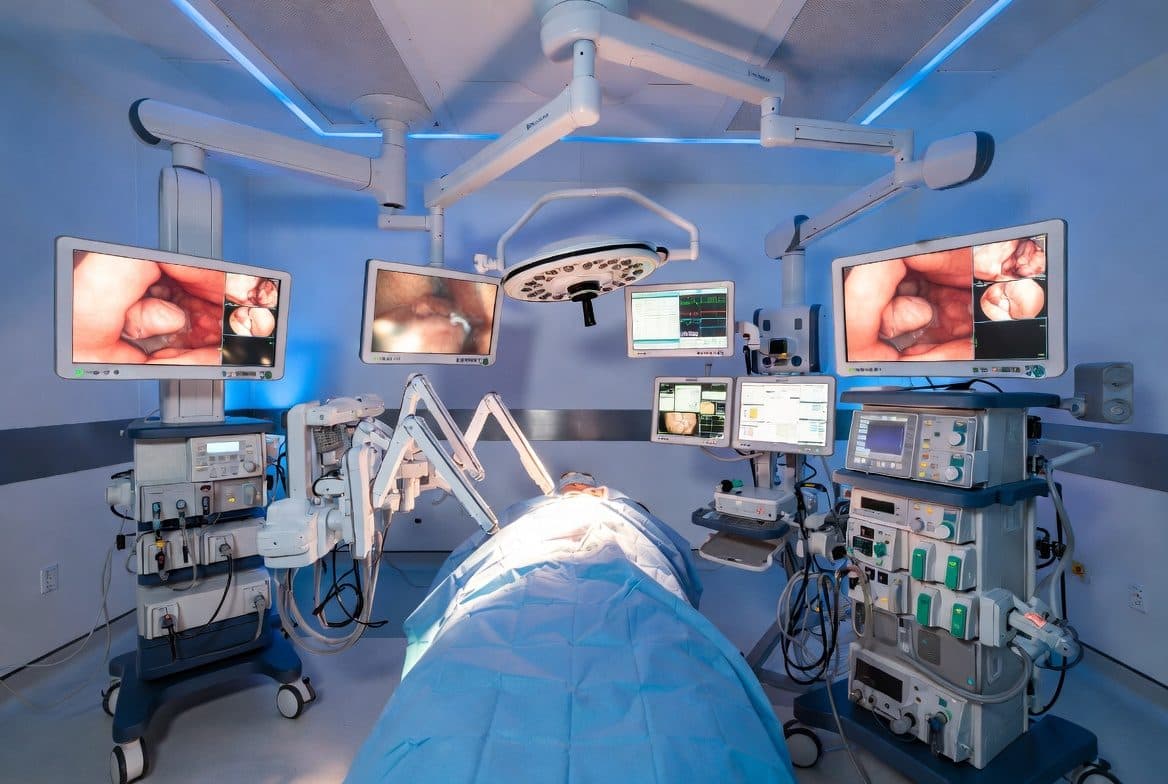
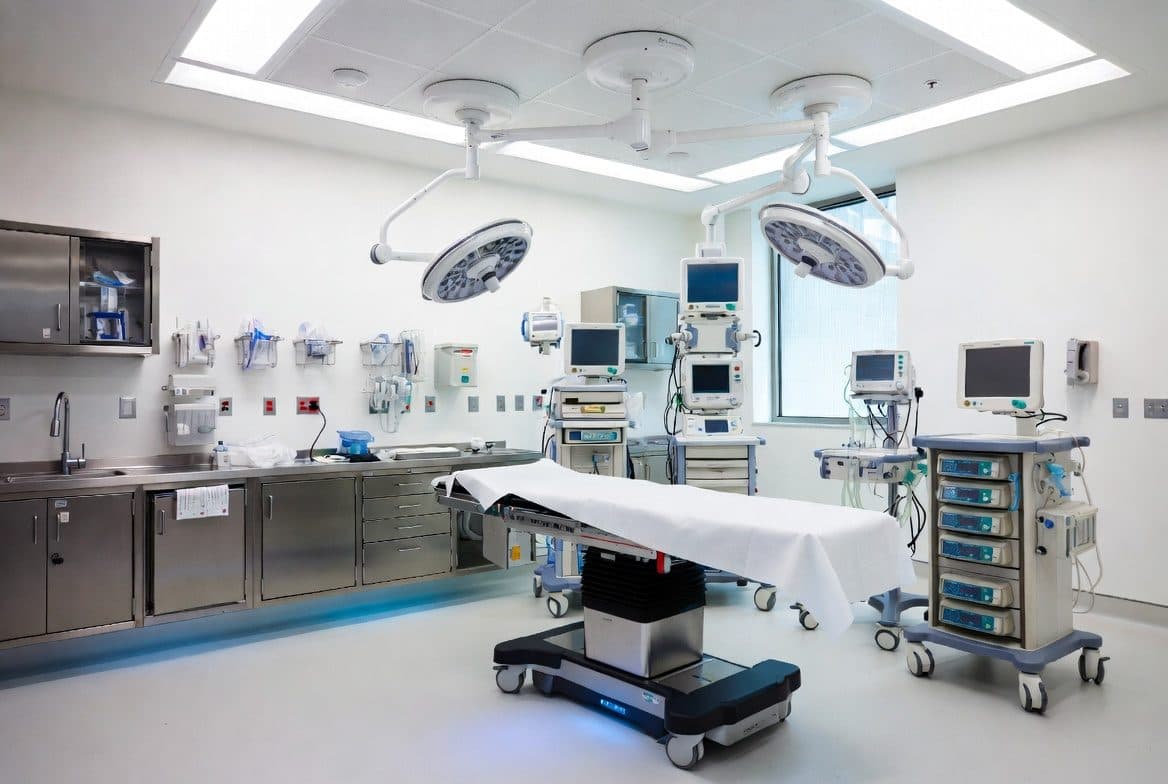
Surgery and procedure rooms need independent HVAC zones, precise humidity and temperature control, and pressure-differential relationships (positive for OR, negative for isolation). Standard commercial HVAC design does not meet ASC requirements. This is engineered specifically for the clinical program.

ICRA — infection control during construction

Infection Control Risk Assessment protocols govern every phase of construction inside or adjacent to an active clinical facility — barrier systems, negative-pressure containment, traffic routing, and crew hygiene requirements. Not just at setup; enforced throughout construction.

Clinical plumbing — exam rooms & scrub stations

Medical exam rooms require specific plumbing configurations. Scrub stations adjacent to OR and procedure rooms must meet OSHA bloodborne pathogen standards for hand-wash proximity. Plumbing layout is dictated by the clinical program, not the floor plan.

Directional — May 2026 — Not a quote

What does a medical office cost to build in DFW?

Directional planning ranges from Pereff's May 2026 DFW cost benchmarks. Real numbers depend on procedure type, imaging modality, facility class, and site conditions. Medical equipment, FF&E, and soft costs are always budgeted separately.

Anchor figures — directional, May 2026

  • Mid-complexity medical TI (primary care, specialty office)

    $175–$450/SF

    Primary care, general specialty, MOB TI without complex imaging. Wide range reflects finish level and MEP density.

  • Surgery centers & imaging-heavy facilities

    $270–$800+/SF

    Sterile HVAC, ASC-grade mechanical, and shielding drive costs higher. ASCs at top of range or above.

  • 5,000 SF mid-complexity medical practice in Plano

    $1.0M–$1.4M all-in

    More with imaging or surgery capability. Medical equipment and FF&E budgeted separately.

  • 8,272 SF Class I oral surgery facility (ground-up comparable)

    $3.1M

    Dr. Sheppard Oral Surgery, Mansfield TX — design-build, 100% financed, complex sitework negotiated with city. Real completed project.

The cost drivers that move your number most

  1. 1

    Imaging shielding & radiation review

    A basic X-ray room adds meaningful shielding cost. CT, MRI prep, or fluoroscopy rooms add substantially more in lead, structural reinforcement, specialty glass, and state review fees.

  2. 2

    ASC-grade HVAC & pressurization

    Independent zoning, HEPA filtration, pressure-differential controls, and commissioning for surgery or procedure rooms require specialty mechanical design and add significantly to HVAC cost vs. standard commercial.

  3. 3

    Medical gas system complexity

    A basic oxygen/vacuum system for primary care differs substantially from a multi-gas system for a surgical suite. Outlet count, piping runs, and manifold sizing all scale with procedure type and room count.

  4. 4

    Finish level & custom clinical casework

    Reception millwork, nurse station build-outs, medication room fixtures, and sterile storage vary widely. Clinical casework is a significant value-engineering opportunity while maintaining functionality.

All figures are directional planning ranges, researched May 2026. Subject to final preconstruction review. Medical equipment, FF&E, and soft costs (permits, design, financing carry) are additional. Not binding estimates. [DFW medical cost benchmarks, May 2026]

Medical practice financing — what Pereff facilitates

Pereff is not a lender. However, Pereff has 25+ years of relationships with healthcare lenders. For the Dr. Sheppard Oral Surgery project, Pereff arranged 100% financing during a government political shutdown with favorable terms — a transaction most lenders were not executing at the time.

For qualifying medical ground-up projects, 100% financing including soft costs (design, permits) has been arranged. For qualifying medical finish-outs, specialized healthcare lenders provide larger amounts with better terms than retail banks. Eligibility and final terms are bank-determined based on the doctor’s financials and project viability. All bank facilitation is included in the One Source Solution at no additional charge.

Pereff AI

Ask Pereff AI about your medical project.

Get a directional cost, permit timeline, or design-build explanation — instantly. Every answer cited from Pereff's project data and DFW medical construction benchmarks.

Answers grounded in Pereff’s project data, DFW competitor intelligence, and current commercial construction benchmarks. Every answer cited.

Medical construction — common questions

How much does a medical office cost to build in Plano?

Directional, May 2026: mid-complexity medical TI in Plano runs $175–$450/SF. A 5,000 SF practice commonly lands $1.0M–$1.4M all-in for construction. Surgery centers and imaging-heavy facilities push $270–$800+/SF. Medical equipment and FF&E are budgeted separately. [DFW medical cost benchmarks, May 2026]

How long does a medical office permit take in DFW?

Standard medical TI permits in Plano and Frisco run 3–8 weeks plus 2–4 weeks for health-department and TDLR review. Imaging rooms add a radiation shielding review (+2–4 weeks). Class I oral surgery (ASC-equivalent) can run 5–9+ months. Dallas (city proper) runs 6–12 weeks for the building permit alone. [DFW permitting data, May 2026]

Can Pereff build a surgery center in DFW?

Yes. The Dr. Sheppard Oral Surgery project (Mansfield, TX) is a Class I medical facility — oral surgery requires ASC-equivalent standards. Pereff managed the 7-month Class I permit process, 100% financing, and complex site development negotiations with the City of Mansfield.

What does ICRA mean and why does it matter?

ICRA stands for Infection Control Risk Assessment. Any construction inside or adjacent to an active clinical facility must follow ICRA protocols — barrier systems, negative-pressure containment, traffic routing, and crew hygiene requirements. A GC unfamiliar with ICRA risks infection events and regulatory action. Pereff implements ICRA as standard practice on any medical project in or adjacent to an active facility.

What DFW cities does Pereff build medical offices in?

Plano (headquarters), Frisco, McKinney, Allen, Prosper, Richardson, Dallas, Fort Worth, and across all of DFW and North Texas. The Dr. Sheppard Oral Surgery project was in Mansfield — Pereff builds wherever the doctor's patients are.

How does Pereff compare to ESA or APEX for a medical build?

ESA and APEX are both established healthcare builders, and for a large institutional program where you already have a separate architect of record and committed financing, either can be a strong choice — pick the team whose strengths fit your project. Pereff's structural difference is the design-build-finance model under one accountable owner-operator: architecture, construction, city permitting, and bank facilitation are delivered by one team, and because Pereff is also a real estate developer it can negotiate with cities on infrastructure (on the Dr. Sheppard project that produced roughly $200K in city-contributed cost relief — a developer capability, not a contractor one). Stephen Pereff is personally on every project. For owners who want a single point of accountability from financing through Certificate of Occupancy, that integration is decisive; if your project genuinely fits one of them better, we'll tell you so honestly.

Start your medical project

One team. Design, permits, financing, and build.

Pereff’s One Source Solution — pre-development, design, city permitting, bank facilitation, and construction under one accountable team — is included in the construction contract. No consultant fee. One point of contact from concept to keys.